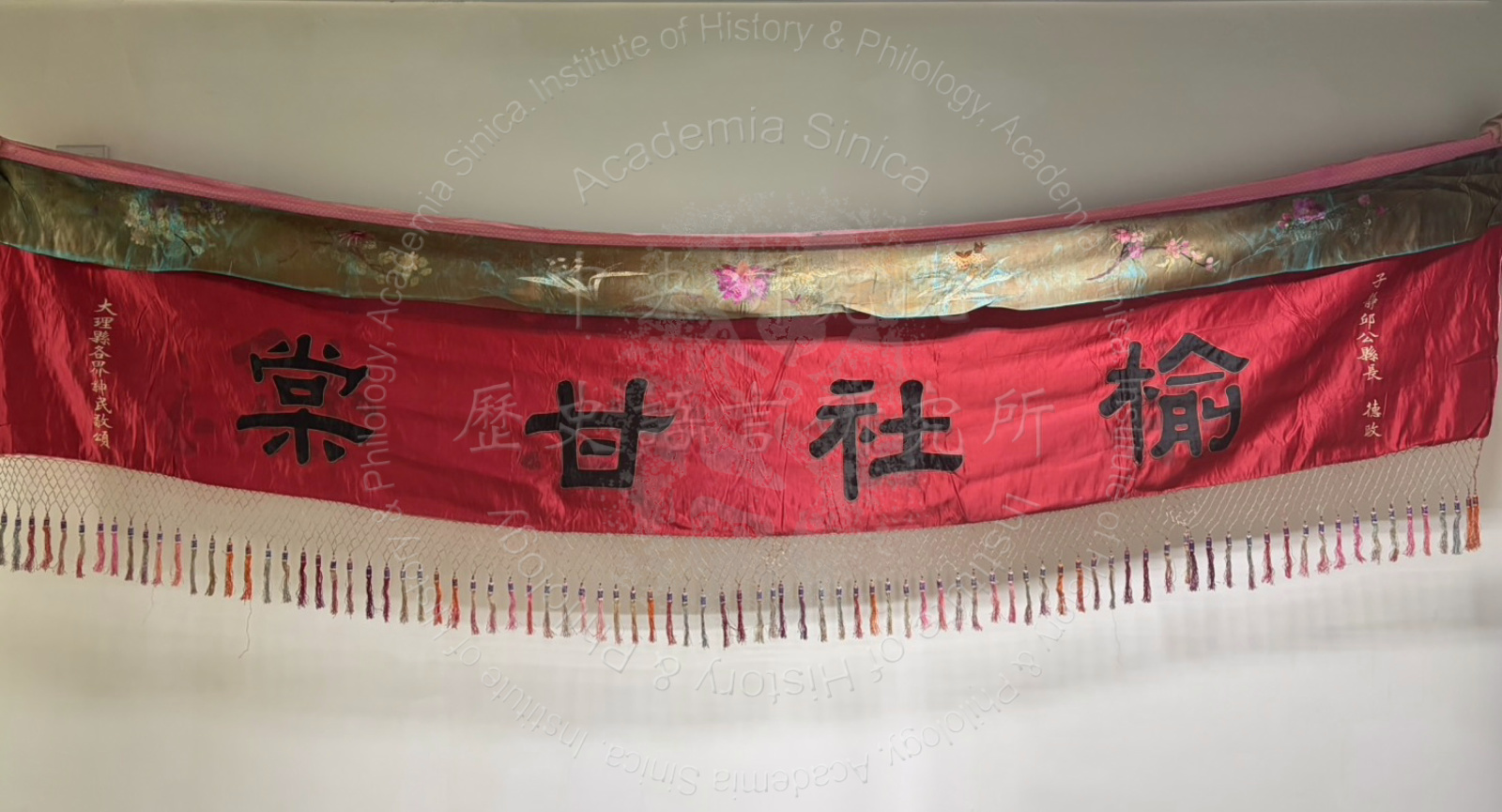
In late imperial China, departing county magistrates were often honored by local residents with gifts such as “wan min san” (lit. “umbrella of ten thousand people”), commemorative pavilions, or steles in recognition of their virtuous administration. This tradition continued into the Republican era, although its forms became more diverse. The Archives preserves the fonds of Ming-tung Chiu (1913–2004), which includes records of his administrative achievements during his tenure as county magistrate of Yiliang and Dali, Yunnan, as well as various gifts and photographs presented to him by local dignitaries and residents upon his departure from office.
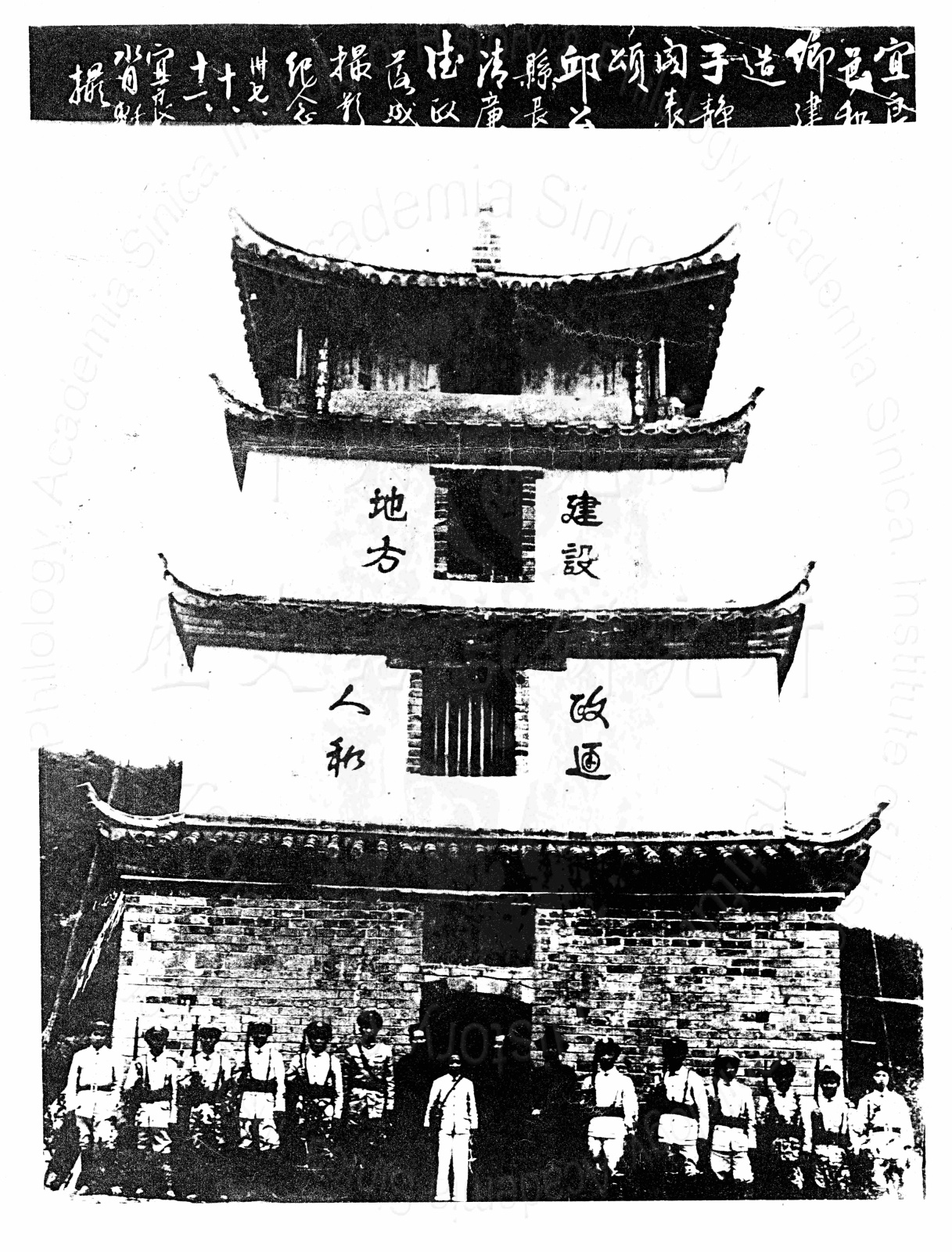
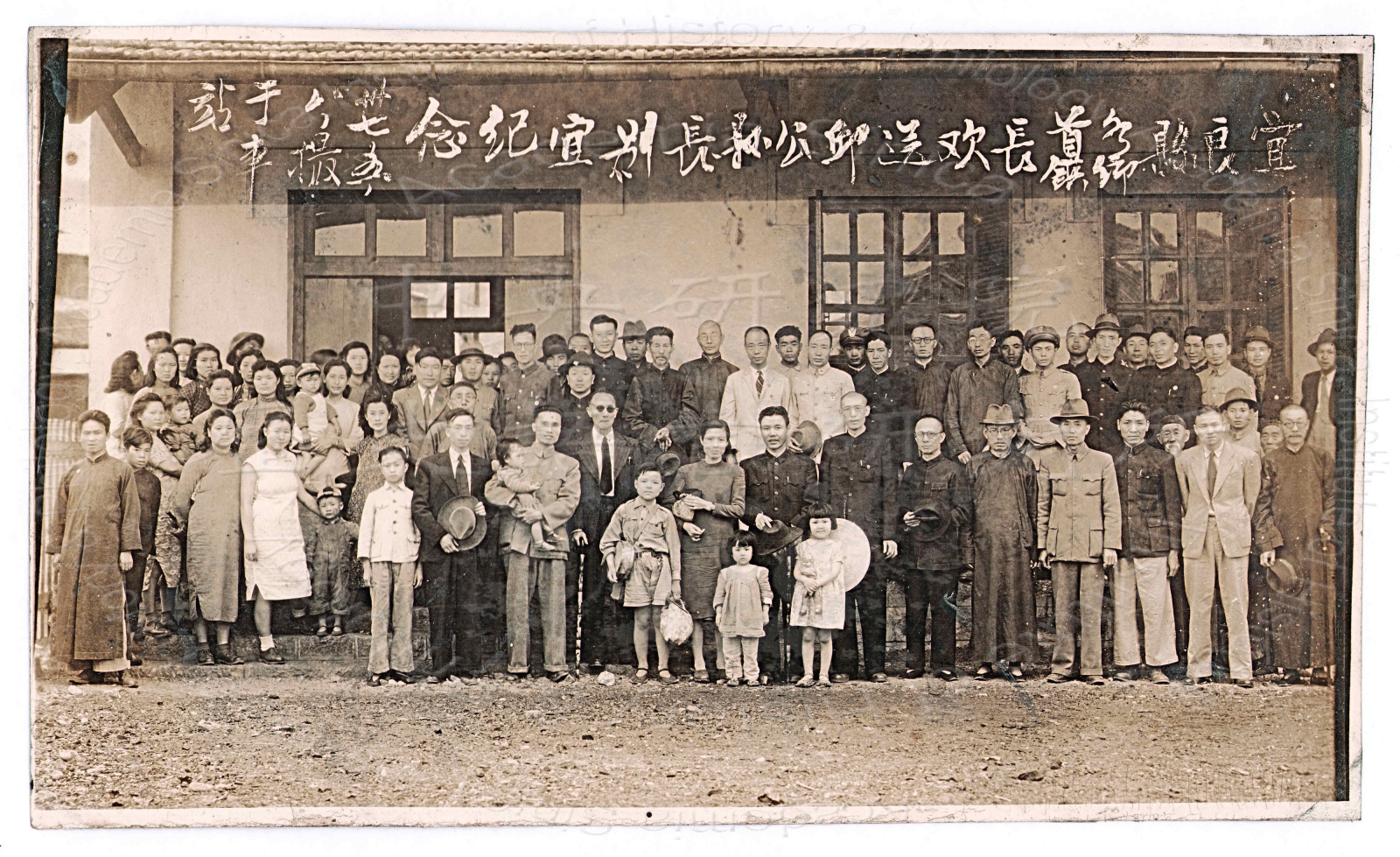
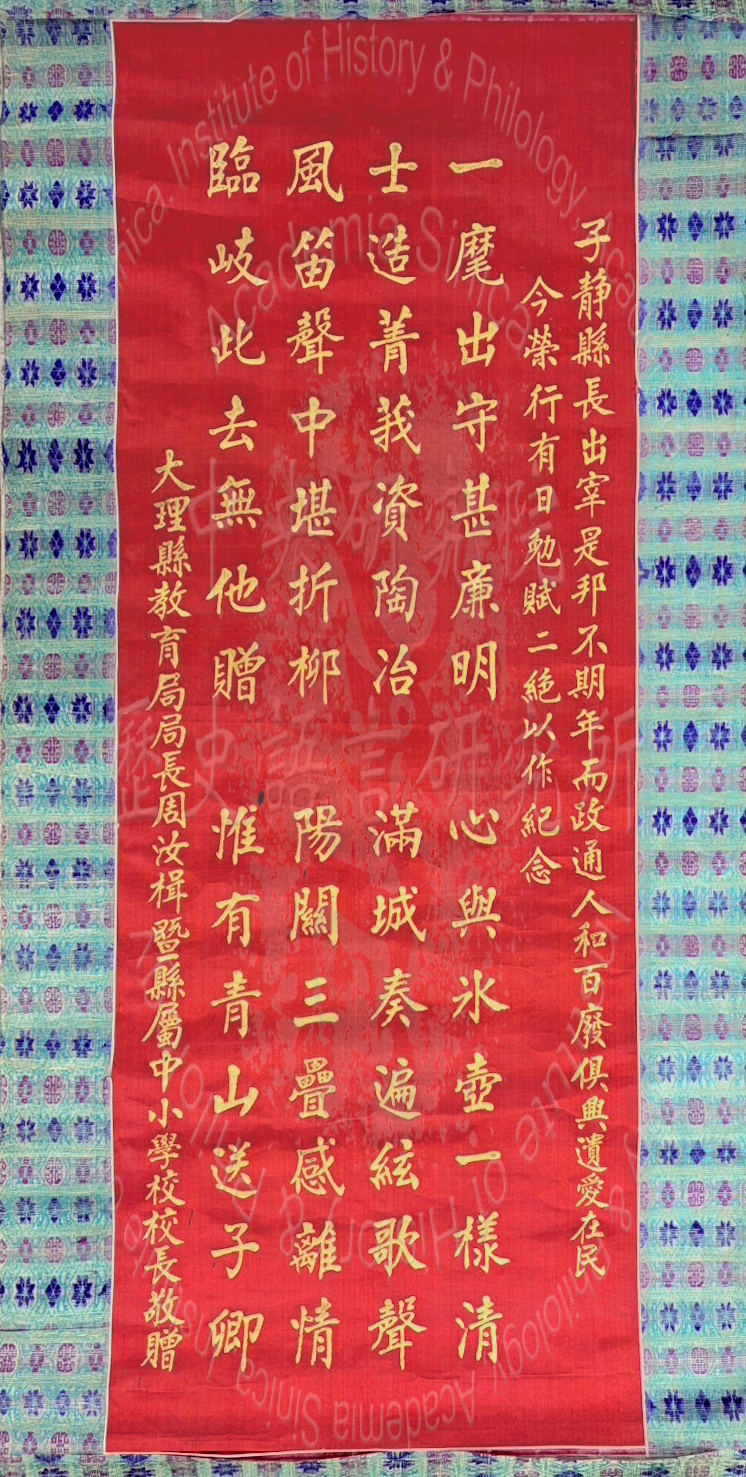
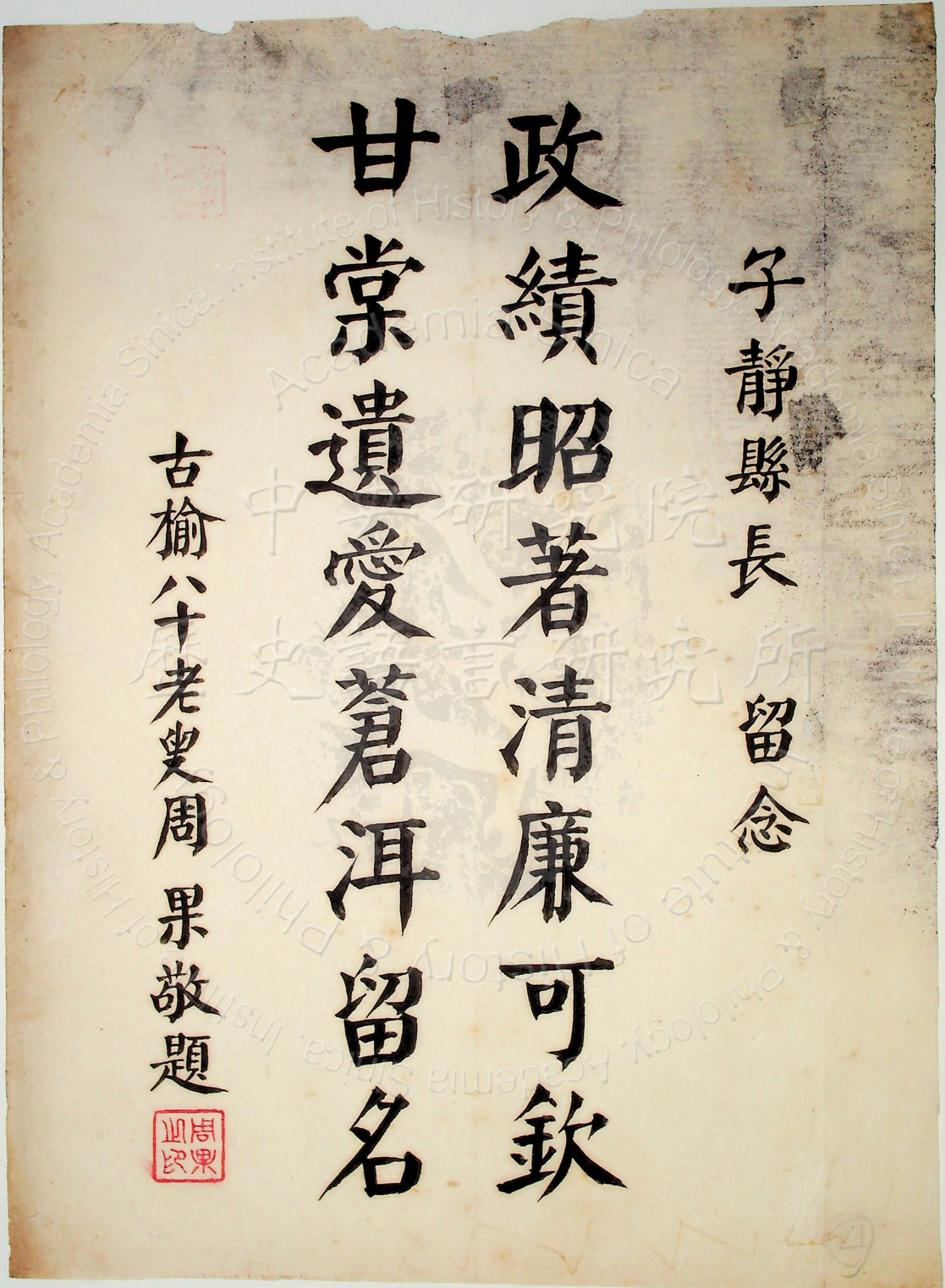
Ming-tung Chiu (courtesy name Zijing) was the younger brother of renowned General Ching-chuan Chiu (1902–1949). After serving in military supply procurement during the Second Sino-Japanese War, Chiu was appointed magistrate of Yiliang County in 1945 and later magistrate of Dali County in 1948, departing in 1949. While serving in Yiliang, he established industries and improved local infrastructure. Admired for his honesty and integrity, he was honored after leaving office with the four-story Zijing Pavilion, where a longevity tablet was enshrined in his name, and a local road was renamed Mingdong (Ming-tung) Road in his honor. Although his tenure in Dali was brief, local gentry and residents presented him with poems, scrolls, couplets, and silk plaques upon his departure. These farewell gifts reflect not only the enduring tradition of honoring departing magistrates but also one form of participation in local politics by local gentry and residents.
Ming-tung Chiu (courtesy name Zijing) was the younger brother of renowned General Ching-chuan Chiu (1902–1949). After serving in military supply procurement during the Second Sino-Japanese War, Chiu was appointed magistrate of Yiliang County in 1945 and later magistrate of Dali County in 1948, departing in 1949. While serving in Yiliang, he established industries and improved local infrastructure. Admired for his honesty and integrity, he was honored after leaving office with the four-story Zijing Pavilion, where a longevity tablet was enshrined in his name, and a local road was renamed Mingdong (Ming-tung) Road in his honor. Although his tenure in Dali was brief, local gentry and residents presented him with poems, scrolls, couplets, and silk plaques upon his departure. These farewell gifts reflect not only the enduring tradition of honoring departing magistrates but also one form of participation in local politics by local gentry and residents.