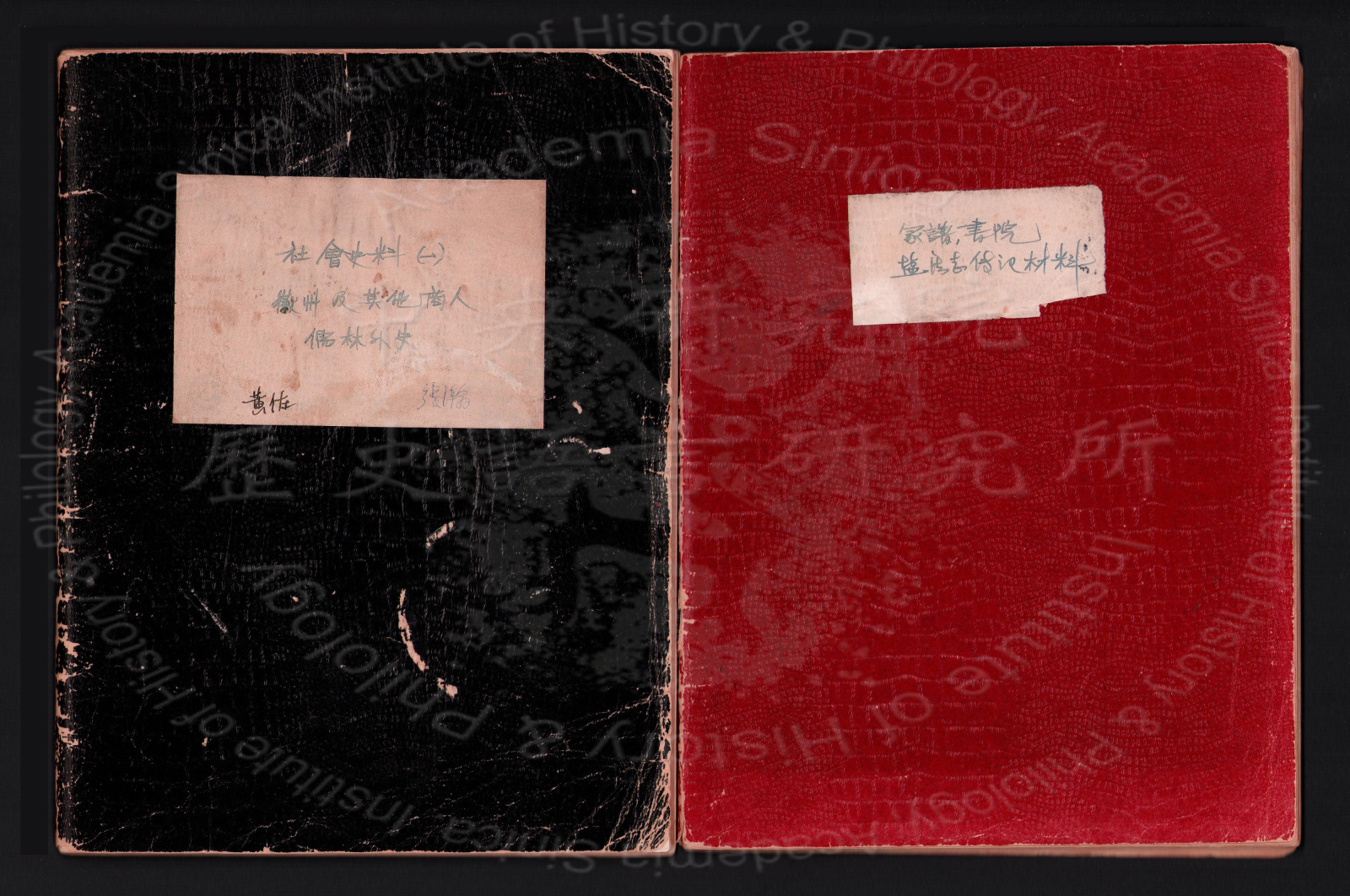


The Archives preserves two notebooks related to Academician Ping-ti Ho’s (1917–2012) research on salt merchants residing in Yangzhou and related salt monopoly systems, his 1954 study of which remains one of his representative works. Ho examines why Yangzhou salt merchants, despite possessing enormous wealth, failed to develop commercial capitalism in China, arguing that their luxury consumption and pursuit of social mobility through the imperial examinations and the purchase of official titles redirected their capital toward status and prestige rather than commercial investment. Furthermore, the division of family property among male heirs also limited the accumulation of wealth.
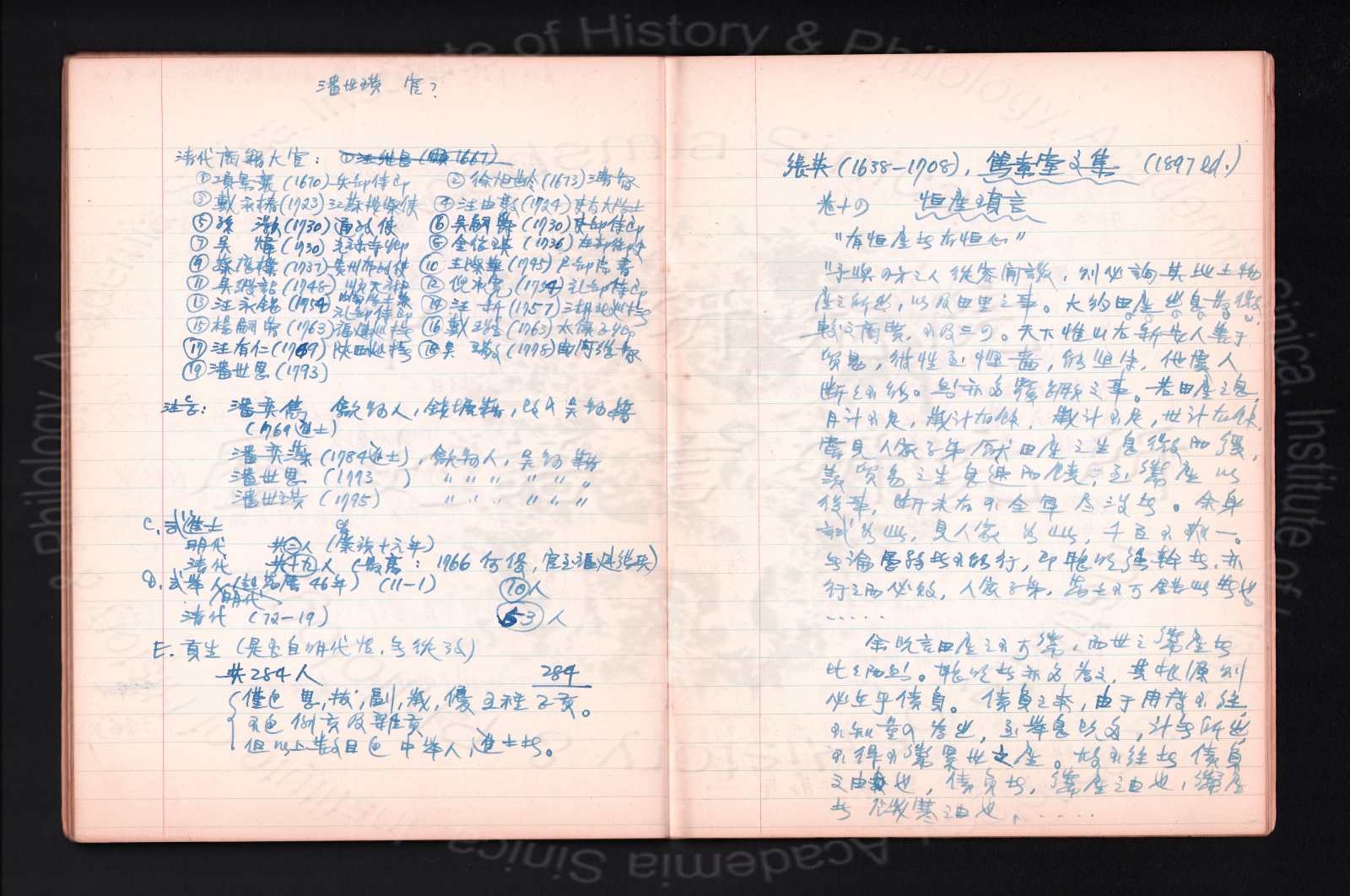
Ho’s research notes reveal the wide range of materials he had collected, including official compilations, gazetteers, family genealogies, notebooks, and works of fiction. He also compiled statistics on Huizhou natives who had obtained the “jinshi” and “juren” degrees to further examine patterns of social mobility. The annotations preserved in these notebooks are particularly valuable for understanding his research methods and analytical processes.
For more, see Ping-ti Ho, “The Salt Merchants of Yang-Chou: A Study of Commercial Capitalism in Eighteenth-Century China,” Harvard Journal of Asiatic Studies 17, no. 1/2 (1954): 130–168.
Ho’s research notes reveal the wide range of materials he had collected, including official compilations, gazetteers, family genealogies, notebooks, and works of fiction. He also compiled statistics on Huizhou natives who had obtained the “jinshi” and “juren” degrees to further examine patterns of social mobility. The annotations preserved in these notebooks are particularly valuable for understanding his research methods and analytical processes.
For more, see Ping-ti Ho, “The Salt Merchants of Yang-Chou: A Study of Commercial Capitalism in Eighteenth-Century China,” Harvard Journal of Asiatic Studies 17, no. 1/2 (1954): 130–168.